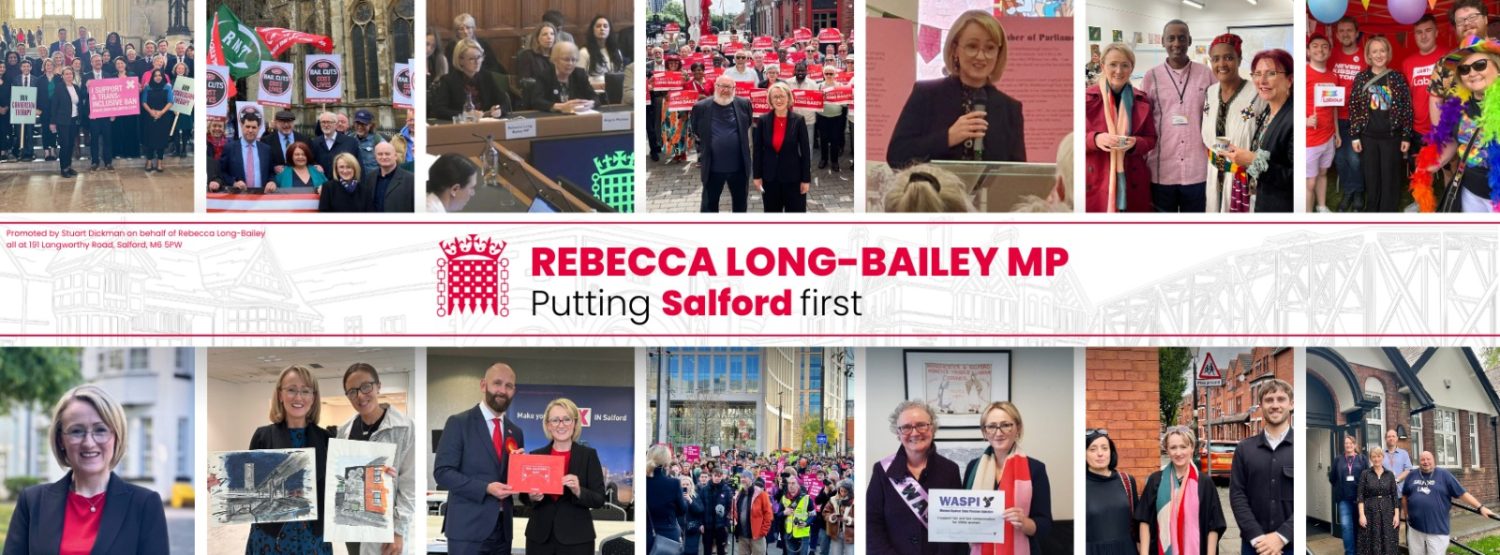
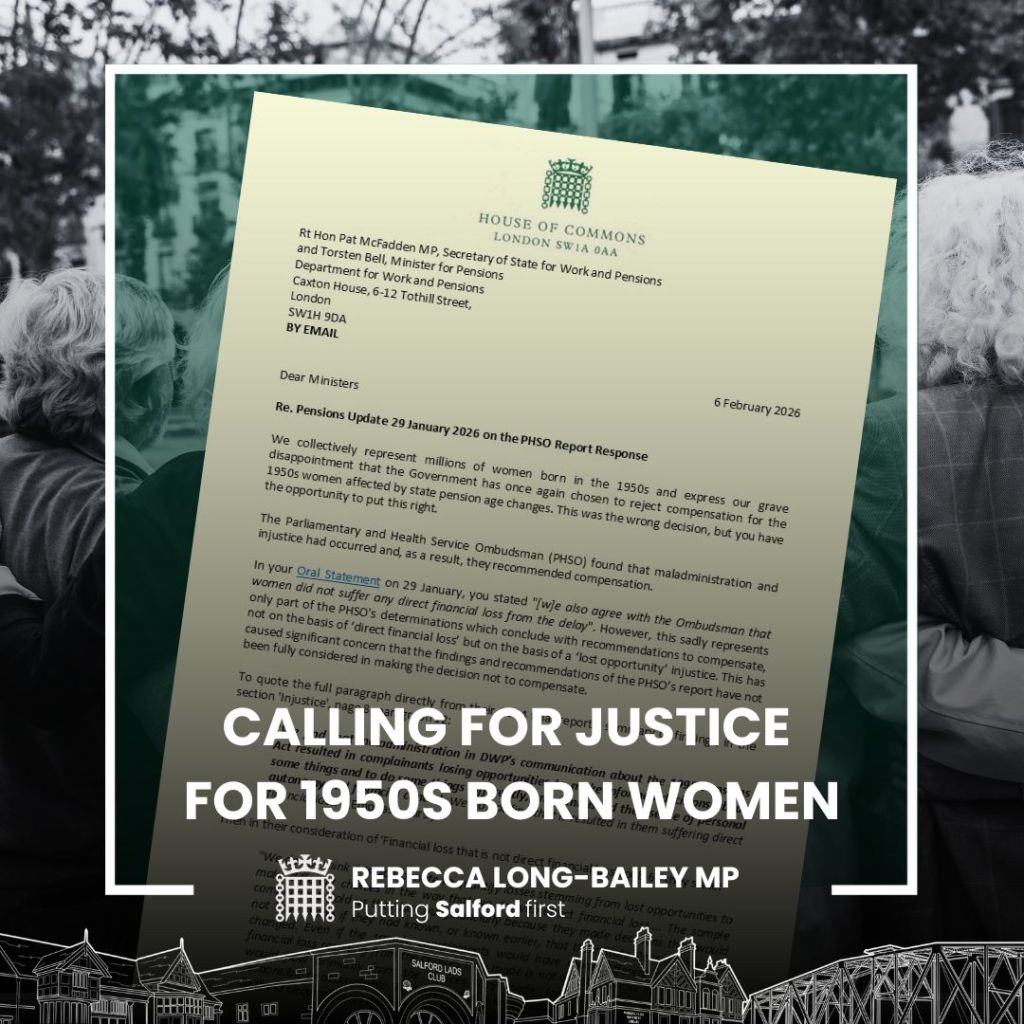
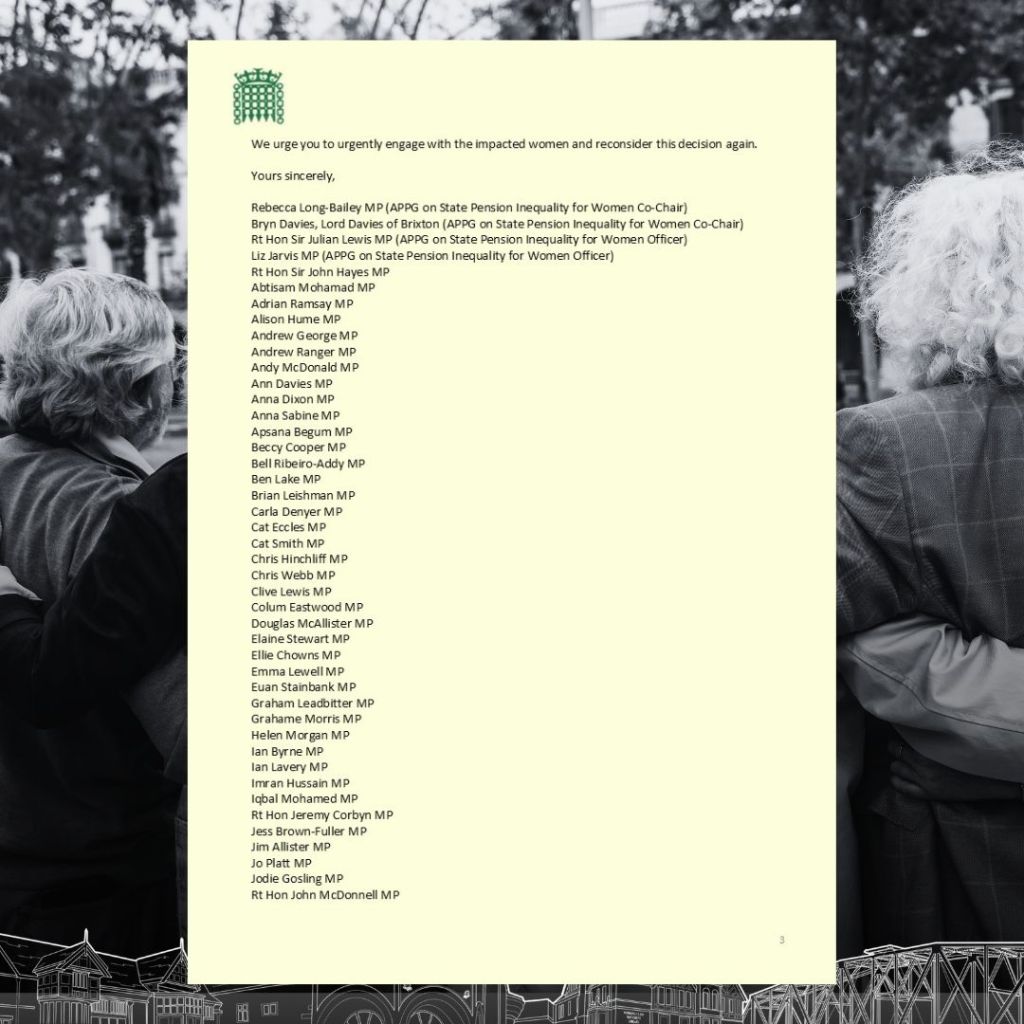
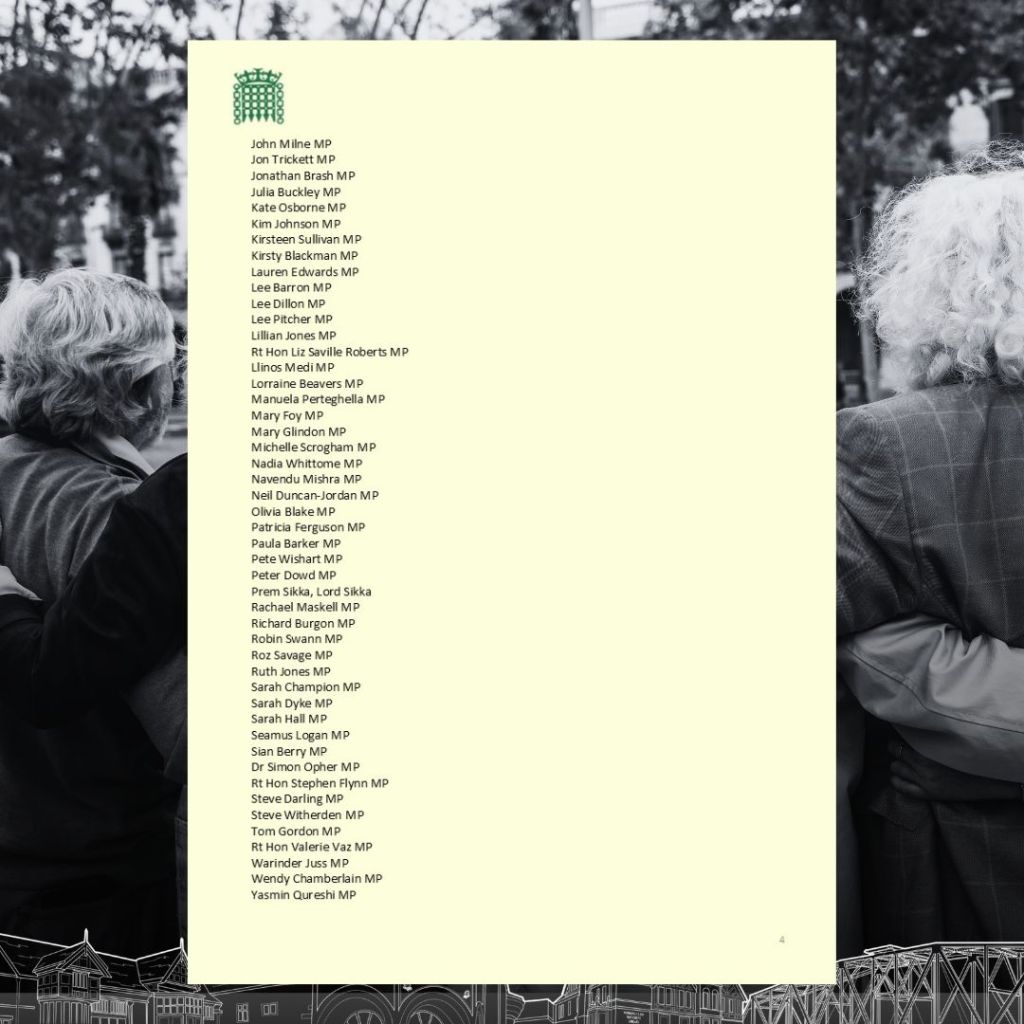
Further to Rebecca Long-Bailey MP, Labour’s Member of Parliament for Salford and Co-Chair of the All-Party Parliamentary Group on State Pension Inequality for Women, calling out the Government’s decision to once again rule out compensation for women born in the 1950s affected by changes to the State Pension age last week, she has co-ordinated a cross-party letter signed by an additional 91 Members of Parliament and Lords Peers which has been sent to relevant Work and Pensions ministers this morning.
Following the statement in Parliament last week, Rebecca commented: “It is frankly wrong that the Government has once again chosen to reject compensation for the 1950s women affected by state pension age changes.”
Regarding the letter, she adds: “This letter shows the strength of feeling across the benches and in both Houses in Parliament that failing to compensate these women pensioners is wrong, and failing to heed the recommendations of the Parliamentary and Health Service Ombudsman is wrong. The Ombudsman said compensation was warranted on the basis of a ‘lost opportunity’ injustice, the Government have even admitted there were wrongs and apologised, so now they need to follow that up with substantive action to help women facing financial hardship as a result.”
—ENDS—
Notes for editors:
The letter in full:
Rt Hon Pat McFadden MP, Secretary of State for Work and Pensions
and Torsten Bell MP, Minister for Pensions
Department for Work and Pensions
BY EMAIL
6 February 2026
Dear Ministers
Re. Pensions Update 29 January 2026 on the PHSO Report Response
We collectively represent millions of women born in the 1950s and express our grave disappointment that the Government has once again chosen to reject compensation for the 1950s women affected by state pension age changes. This was the wrong decision, but you have the opportunity to put this right.
The Parliamentary and Health Service Ombudsman (PHSO) found that maladministration and injustice had occurred and, as a result, they recommended compensation.
In your Oral Statement on 29 January, you stated “[w]e also agree with the Ombudsman that women did not suffer any direct financial loss from the delay”. However, this sadly represents only part of the PHSO’s determinations which conclude with recommendations to compensate, not on the basis of ‘direct financial loss’ but on the basis of a ‘lost opportunity’ injustice. This has caused significant concern that the findings and recommendations of the PHSO’s report have not been fully considered in making the decision not to compensate.
To quote the full paragraph directly from their 2024 final report’s summary of findings, in the section ‘Injustice’, page 8, paragraph 12:
“We find that maladministration in DWP’s communication about the 1995 Pensions Act resulted in complainants losing opportunities to make informed decisions about some things and to do some things differently, and diminished their sense of personal autonomy and financial control. We do not find that it resulted in them suffering direct financial loss.” (Emphasis ours.)
Then in their consideration of ‘Financial loss that is not direct financial loss’, p68-69 they state:
“We do not think it is appropriate to quantify losses stemming from lost opportunities to make different choices in the way that we do with direct financial loss…. The sample complainants told us they lost out financially because they made decisions they would not have made if they had known, or known earlier, that their State Pension age had changed. Even if the sample complainants would have made different choices, any financial loss resulting from the choices they made is not direct financial loss. Their loss would flow primarily from the choices they made, for which DWP is not directly responsible or accountable. To decide what is an appropriate amount of compensation
in these circumstances we apply our severity of injustice scale… When considering where a ‘lost opportunity’ injustice sits on the scale, we consider the significance of the opportunity that was lost.” (Emphasis ours.)
Finally, in their consideration of injustice, section E. 5, page 83, paragraph 459, they state:
“For most sample complainants we consider the primary injustice is that they were denied opportunities to make informed decisions about some things, and to do some things differently, because of maladministration in DWP’s communication about State Pension age. That is a material injustice.” (Emphasis ours.)
On the issue of financial remedy they state, at section F.3.1, paragraph 489:
“We have explained our thinking about where on our severity of injustice scale the sample complainants’ injustice sits. We would have recommended they are paid compensation at level 4 of the scale.” (Emphasis ours.)
Then at paragraph 502:
“As a matter of principle, redress should reflect individual impact. But the numbers of people who have potentially suffered injustice because of the maladministration, the need for remedy to be delivered without delay, and the cost and administrative burden of assessing potentially millions of individual women’s circumstances may indicate the need for a more standardised approach. HM Treasury’s ‘Managing Public Money’
requires compensation schemes to be efficient, effective and deliver value for money. It also says the administrative costs associated with compensation schemes should not be excessive.” (Emphasis ours.)
And finally at paragraph 503:
“Parliament may want to consider a mechanism for assessing individual claims of injustice. Or it may consider a flat-rate payment would deliver more efficient resolution, recognising that will inevitably mean some women being paid more or less compensation than they otherwise would.” (Emphasis ours.)
As such, the PHSO clearly determined that compensation should be paid on the basis of ‘injustice’ and they advised that Parliament may wish to consider either an individual or flat rate compensation scheme. At no point in the report did they determine that issuing no compensation at all should be an option.
We believe that the PHSO’s advice to Government was clear and ignoring it is not only unprecedented, it also undermines the authority of the Ombudsman and sends a damaging message to the public about how the state responds when it gets things wrong.
Women pensioners have lost their homes and their savings, and their health has been impacted over this matter. The Government have rightly apologised for the wrong; now they need to put that wrong right.
We urge you to urgently engage with the impacted women and reconsider this decision again.
Yours sincerely,
Rebecca Long-Bailey MP (APPG on State Pension Inequality for Women Co-Chair)
Bryn Davies, Lord Davies of Brixton (APPG on State Pension Inequality for Women Co-Chair)
Rt Hon Sir Julian Lewis MP (APPG on State Pension Inequality for Women Officer)
Liz Jarvis MP (APPG on State Pension Inequality for Women Officer)
Rt Hon Sir John Hayes MP
Abtisam Mohamad MP
Adrian Ramsay MP
Alison Hume MP
Andrew George MP
Andrew Ranger MP
Andy McDonald MP
Ann Davies MP
Anna Dixon MP
Anna Sabine MP
Apsana Begum MP
Beccy Cooper MP
Bell Ribeiro-Addy MP
Ben Lake MP
Brian Leishman MP
Carla Denyer MP
Cat Eccles MP
Cat Smith MP
Chris Hinchliff MP
Chris Webb MP
Clive Lewis MP
Colum Eastwood MP
Douglas McAllister MP
Elaine Stewart MP
Ellie Chowns MP
Emma Lewell MP
Euan Stainbank MP
Graham Leadbitter MP
Grahame Morris MP
Helen Morgan MP
Ian Byrne MP
Ian Lavery MP
Imran Hussain MP
Iqbal Mohamed MP
Rt Hon Jeremy Corbyn MP
Jess Brown-Fuller MP
Jim Allister MP
Jo Platt MP
Jodie Gosling MP
Rt Hon John McDonnell MP
John Milne MP
Jon Trickett MP
Jonathan Brash MP
Julia Buckley MP
Kate Osborne MP
Kim Johnson MP
Kirsteen Sullivan MP
Kirsty Blackman MP
Lauren Edwards MP
Lee Barron MP
Lee Dillon MP
Lee Pitcher MP
Lillian Jones MP
Rt Hon Liz Saville Roberts MP
Llinos Medi MP
Lorraine Beavers MP
Manuela Perteghella MP
Mary Foy MP
Mary Glindon MP
Michelle Scrogham MP
Nadia Whittome MP
Navendu Mishra MP
Neil Duncan
-Jordan MP
Olivia Blake MP
Patricia Ferguson MP
Paula Barker MP
Pete Wishart MP
Peter Dowd MP
Prem Sikka, Lord Sikka
Rachael Maskell MP
Richard Burgon MP
Robin Swann MP
Roz Savage MP
Ruth Jones MP
Sarah Champion MP
Sarah Dyke MP
Sarah Hall MP
Seamus Logan MP
Sian Berry MP
Dr Simon Opher MP
Rt Hon Stephen Flynn MP
Steve Darling MP
Steve Witherden MP
Tom Gordon MP
Rt Hon Valerie Vaz MP
Warinder Juss MP
Wendy Chamberlain MP
Yasmin Qureshi MP
 Rebecca Long-Bailey